Reading Casino Posters as Public Announcements
Reading casino posters as public announcements helps you distinguish promotion from practical details and decide what the design actually tells you.
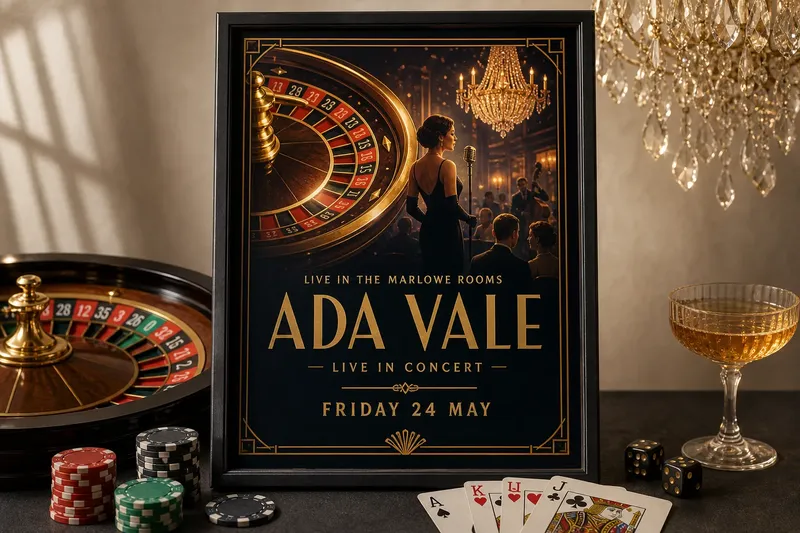
A casino poster in a station window might pair a glittering roulette wheel with a small line naming a concert. Reading casino posters as public announcements means asking not only what looks enticing, but what the poster is trying to make publicly legible: a venue, an event, an invitation, or an image of leisure.
What kind of announcement is the poster making?
Start with the poster’s apparent purpose. It may advertise a particular performance, promote a restaurant, announce a seasonal event, or simply present the venue as a place to spend an evening. Those are different kinds of claims, even when they share the same glamorous imagery.
Look for verbs and nouns that identify an action or offering: “performing”, “dinner”, “opening”, or the name of a show. If the copy offers only a broad invitation, treat it as promotion rather than a precise programme.
How does the poster address its audience?
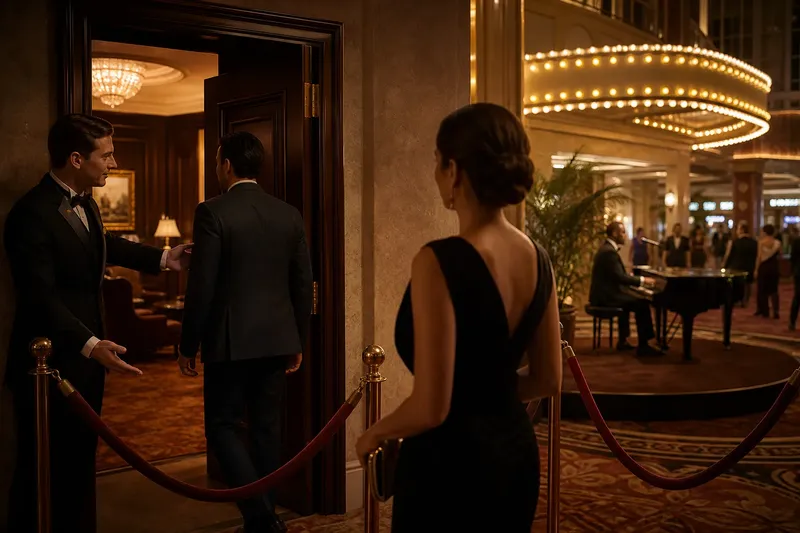
Public advertising often speaks to an imagined visitor. A poster might show a dressed-up couple, a group at a table, or no people at all. These choices suggest whom the advertiser has chosen to address; they do not establish who attends the venue.
The wording matters too. “Bring someone special” assumes a companion, while “live music tonight” makes a more direct announcement. Notice the implied audience without treating it as a description of the public.
What do casino motifs add to the message?
Cards, roulette wheels, dice and chandeliers can identify casino culture quickly, but they may also borrow associations with risk, ceremony or spectacle. Their meaning depends on the surrounding copy and imagery: a roulette wheel beside a restaurant announcement can make dining part of the venue’s broader identity.
Ask what the symbols are doing in this particular poster. They might identify the venue, set a mood, or compete with the event information for attention.
What should you check before relying on the announcement?
- Event name: If a specific title is printed clearly, record it; if no title appears, treat the poster as a general promotion and look for another programme source.
- Date or timing: If a date or performance time is legible, use that stated detail; if it is missing or unclear, do not infer when the event takes place.
- Venue identity: If the casino or room is named, record the exact wording; if the name is absent, check the venue’s official listings before deciding where the event is held.
- Offer or service: If the copy names a meal, show or other service, distinguish that named offer from the surrounding decorative imagery; if it does not, do not assume the poster promises one.
- Conditions: If the poster mentions booking, entry terms or restrictions, note them; if those details are absent, seek the venue’s current information before making plans.
- Source and currency: If the poster includes a current venue account or contact route, use it to confirm details; if it appears undated or detached from an official source, treat the announcement as unverified.
How can you describe a casino poster accurately?
Say you encounter an invented poster for the fictional Marlowe Rooms. It shows a gold roulette wheel, names a singer called Ada Vale, gives a Friday date, and includes no booking terms. First, transcribe “Ada Vale” and the printed date as the poster’s stated announcement. Next, record the roulette wheel as a casino motif, not as information about the performance. Then mark booking terms as absent and check the fictional venue’s official listing before deciding whether the poster supplies enough information to plan a visit. The resulting description separates the named event from the visual branding and identifies what remains unknown.
How do posters relate to other public information?
A poster is one piece of a venue’s public communication, not necessarily a complete notice. A programme, ticket page or direct venue enquiry may clarify details that the design leaves out, such as the room, booking arrangements or whether an event is still listed.
For a reader considering a visit, the useful distinction is between an attractive invitation and an actionable announcement. Reading casino posters as public announcements helps you identify what the poster states, what it merely implies, and which unanswered detail to confirm before acting.